
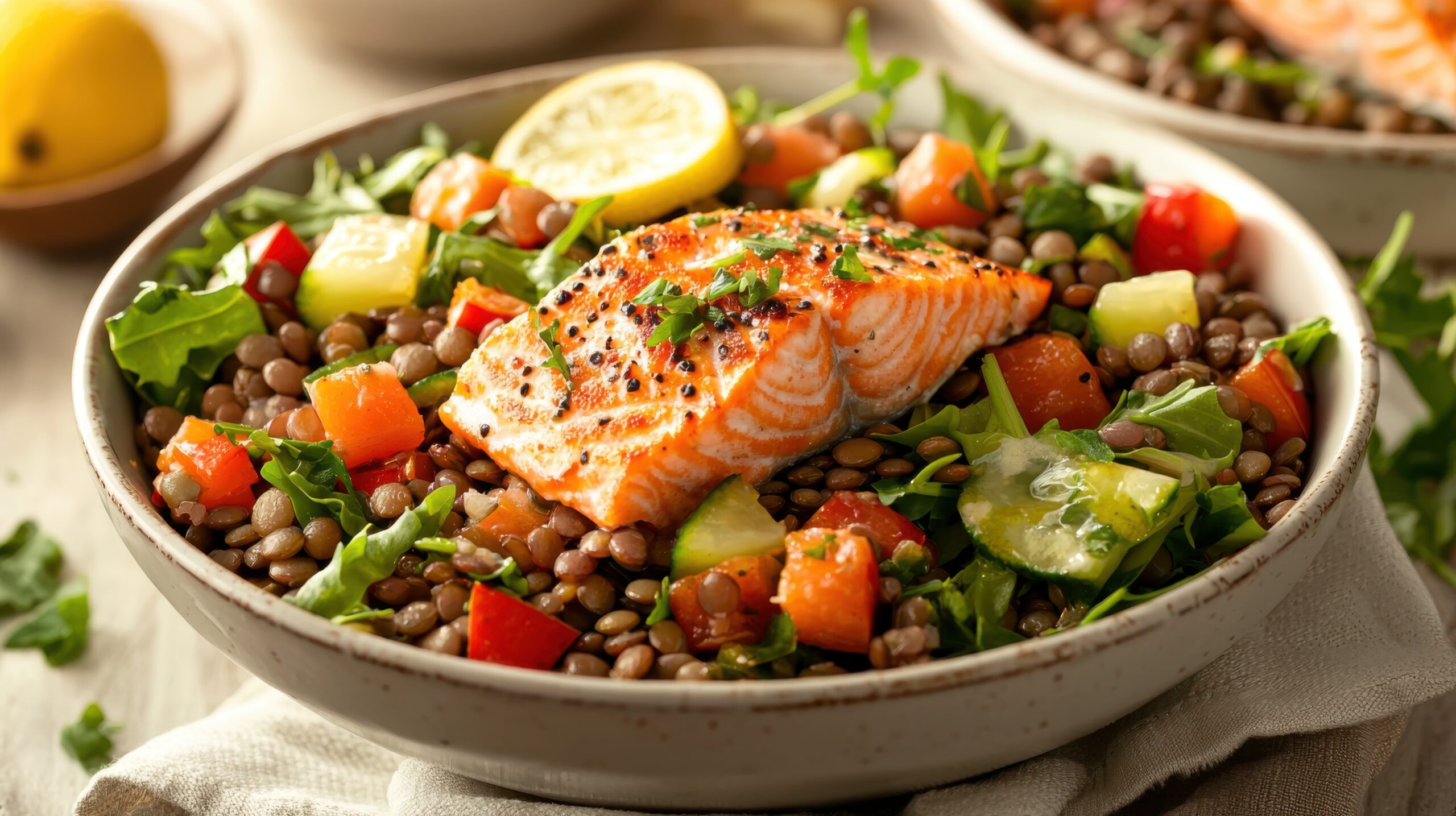
If you’re in perimenopause and you’ve noticed that food affects you differently than it used to — more fatigue after certain meals, blood sugar swings that weren’t there before, a harder time feeling satisfied — you’re not imagining it. Estrogen fluctuations directly impact how your body processes food, particularly carbohydrates, and how efficiently it manages blood sugar and insulin. That’s why we’re sharing these Mediterranean meals for perimenopause.
Two nutrients matter more during this transition than almost anything else: protein and fiber. Protein preserves lean muscle as metabolism slows and supports the satiety hormones that keep hunger and cravings in check. Fiber slows glucose absorption, feeds the gut microbiome, and supports the estrogen clearance pathways that keep hormones in better balance.
The Mediterranean diet happens to be one of the best dietary frameworks for delivering both — and for supporting the anti-inflammatory, hormone-supportive eating pattern that perimenopause calls for. Each of the meals below is built around at least 25 grams of protein, 7 or more grams of fiber, and the kinds of whole, satisfying foods that are genuinely enjoyable to eat.
Mediterranean Meals for Perimenopause:
1. Greek Salmon Bowl with Lentils, Cucumber & Olive Tapenade
This bowl does a lot of work quietly. Salmon delivers omega-3 fatty acids (EPA and DHA) that are specifically anti-inflammatory — meaningful during perimenopause when systemic inflammation tends to increase. Lentils are one of the best plant foods you can eat for combined fiber and protein, and they have a sustained effect on blood sugar that extends well past the meal. The olive tapenade adds monounsaturated fats and flavor without complicating anything.
What’s in it: 6 oz roasted or pan-seared salmon, 1/2 cup cooked green lentils, sliced cucumber and cherry tomatoes, kalamata olives, 2 tbsp olive tapenade, fresh dill, lemon
Approx. macros: 38g protein | 10g fiber | Healthy fats: High
2. White Bean & Vegetable Soup with Chicken and Rosemary
White beans are an underappreciated perimenopause food. They’re high in soluble fiber, which helps modulate post-meal blood sugar, and they provide a meaningful amount of plant-based protein. Combined with chicken and a base of sautéed vegetables in olive oil, this becomes a deeply satisfying, anti-inflammatory meal. Make a large pot and eat it across three days — the flavors improve with time.
What’s in it: 6 oz shredded chicken breast, 3/4 cup white beans (cannellini), zucchini, carrots, celery, diced tomatoes, garlic, fresh rosemary, olive oil, low-sodium broth
Approx. macros: 35g protein | 12g fiber | Carbohydrates: Low-moderate, slow-digesting
3. Turkish-Style Eggs with Spinach, Chickpeas & Yogurt Sauce
This is a riff on the Turkish breakfast dish Çılbır, made more filling and more fiber-forward. Eggs poached in spiced tomato sauce, served over chickpeas and wilted spinach, finished with a dollop of full-fat Greek yogurt. The combination of eggs and chickpeas gives you a complete protein profile, the spinach adds magnesium and folate (both important for hormonal function), and the yogurt contributes calcium and gut-supporting probiotics.
What’s in it: 3 eggs, 1/2 cup chickpeas, 2 cups spinach, diced tomatoes with garlic and cumin, 3 tbsp full-fat Greek yogurt, olive oil, smoked paprika
Approx. macros: 28g protein | 9g fiber | Carbohydrates: Low-moderate
4. Grilled Chicken Souvlaki with Tzatziki, Roasted Vegetables & Farro
Souvlaki — marinated, grilled chicken skewers — is one of the most accessible Mediterranean proteins you can prepare at home. Marinating in lemon, garlic, and oregano takes five minutes the night before. The tzatziki (Greek yogurt, cucumber, garlic, dill) adds protein and probiotics. Farro is worth including specifically because it contains more protein than most grains and has a lower glycemic impact than white rice or pasta — a meaningful detail when blood sugar regulation is a priority.
What’s in it: 6 oz chicken thighs (marinated in lemon, olive oil, garlic, oregano), 1/2 cup cooked farro, roasted bell peppers and zucchini, 1/4 cup tzatziki, fresh parsley
Approx. macros: 34g protein | 7g fiber | Healthy fats: Moderate
5. Sardine & Arugula Salad with White Beans, Capers & Lemon Olive Oil Dressing
Sardines are one of the most nutritionally dense foods you can eat — they’re high in omega-3s, vitamin D, calcium (from the bones), and B12, and they’re low in mercury compared to larger fish. If you haven’t cooked with them before, the canned variety packed in olive oil is an easy starting point. The arugula brings a peppery bite and glucosinolates that support liver detoxification pathways — important for estrogen clearance. White beans round out the fiber and protein.
What’s in it: 1 can sardines in olive oil, 1/2 cup white beans, 3 cups arugula, capers, red onion, cherry tomatoes, lemon juice, extra virgin olive oil
Approx. macros: 32g protein | 9g fiber | Healthy fats: High
6. Lamb & Lentil Stuffed Bell Peppers with Feta and Herbs
Lamb is a traditional Mediterranean protein that’s worth including periodically — it provides complete protein, zinc (which supports hormone synthesis), and iron in a highly bioavailable form. Pairing it with lentils adds plant-based protein and a significant fiber boost, while the feta contributes calcium. These stuff-and-bake peppers are great for meal prep and reheat well.
What’s in it: 4 oz ground grass-fed lamb, 1/3 cup cooked green lentils, 2 bell peppers, diced tomatoes, garlic, cinnamon, allspice, 2 tbsp crumbled feta, fresh mint
Approx. macros: 30g protein | 8g fiber | Carbohydrates: Low
7. Shrimp & Artichoke Orzo with Olive Oil, Garlic & Parsley
Shrimp is a lean, fast-cooking protein that fits well into a Mediterranean pattern. Artichoke hearts — easy to use from a jar or frozen — are a standout fiber source, particularly for prebiotic fiber that feeds beneficial gut bacteria. Whole wheat orzo keeps the pasta component modest and slower-digesting. This dish comes together in under 20 minutes.
What’s in it: 6 oz shrimp, 1/2 cup whole wheat orzo (cooked), 1/2 cup artichoke hearts, garlic, cherry tomatoes, fresh parsley, olive oil, lemon zest
Approx. macros: 33g protein | 7g fiber | Healthy fats: Moderate
8. Baked Cod with Tomatoes, Olives, Capers & White Beans
This is classic Mediterranean preparation — white fish baked in a sauce of tomatoes, olives, capers, and garlic, which is traditionally called acqua pazza or ‘crazy water’ in Italian coastal cooking. Cod is mild, affordable, and high in lean protein. The tomato base provides lycopene (an antioxidant with cardiovascular benefits), and the white beans added to the pan during baking absorb the sauce and contribute a full serving of fiber and additional protein.
What’s in it: 6 oz cod fillet, 1/2 cup white beans, crushed tomatoes, kalamata olives, capers, garlic, olive oil, fresh basil
Approx. macros: 36g protein | 10g fiber | Carbohydrates: Low
9. Chicken & Chickpea Tagine with Preserved Lemon and Olives
North African spiced braises fit squarely within the broader Mediterranean dietary pattern, and this tagine-style dish is one of the most satisfying options on this list. The warm spices — cumin, coriander, ginger, turmeric — contribute anti-inflammatory phytocompounds alongside the flavor. Chickpeas add both soluble and insoluble fiber, and the braise format makes the chicken thighs exceptionally tender. Serve over a small portion of cauliflower rice or alongside roasted vegetables to keep the carbohydrate load low.
What’s in it: 6 oz chicken thighs, 1/2 cup chickpeas, diced tomatoes, preserved lemon or lemon zest, green olives, onion, garlic, cumin, coriander, turmeric, cinnamon, olive oil, fresh cilantro
Approx. macros: 35g protein | 10g fiber | Carbohydrates: Low-moderate
10. Greek Lentil Salad with Hard-Boiled Eggs, Roasted Red Peppers & Tahini Dressing
This is a meal that works as well at a desk as it does at the dinner table — easy to prep in advance, no reheating required, and genuinely filling. Lentils and eggs together cover the complete amino acid profile. The tahini dressing (made from sesame paste, lemon, garlic, and olive oil) adds monounsaturated and polyunsaturated fats plus a small amount of calcium. Roasted red peppers provide vitamin C, which enhances the absorption of iron from the lentils — a nutritionally useful pairing.
What’s in it: 3/4 cup cooked green or French lentils, 2 hard-boiled eggs, roasted red peppers, cucumber, red onion, fresh parsley, 2 tbsp tahini dressing (tahini, lemon, garlic, olive oil, water)
Approx. macros: 27g protein | 12g fiber | Healthy fats: High
Why Protein and Fiber Matter So Much in Perimenopause
During perimenopause, estrogen and progesterone fluctuations set off a cascade of metabolic changes that affect how the body processes food:
- Insulin sensitivity decreases, making blood sugar harder to regulate after meals
- Muscle mass begins to decline more rapidly without adequate protein intake
- Gut motility can slow, making fiber intake more important than before
- Sleep disruption affects hunger hormones, increasing cravings and appetite dysregulation
Eating 25–35g of protein and 7–12g of fiber per meal — starting at breakfast and carrying it through the day — directly counteracts all of these. It reduces post-meal glucose spikes, supports lean muscle preservation, improves satiety, and stabilizes the mood and energy fluctuations that often accompany this transition.
The Mediterranean diet framework gives you a practical way to hit those targets without tracking every gram — because the foods themselves are naturally dense in what your body needs most right now.
Personalized Nutrition Support for Perimenopause
These meals are a strong starting point, but the right nutritional approach for perimenopause depends on your specific symptoms, hormone levels, gut health, and what’s happening metabolically. Some women do best with a higher-protein, lower-carbohydrate approach. Others need more support for gut dysbiosis or adrenal function before dietary changes make a significant difference.
If you’re experiencing fatigue, weight changes, mood swings, blood sugar instability, or disrupted sleep, individualized support can make a meaningful difference. Schedule a complimentary consultation at Rocky Mountain Natural Medicine to learn how a personalized approach to nutrition and hormone support can help you feel your best through this transition.
References:
PREDIMED Trial (Mediterranean diet + cardiovascular risk): https://www.nejm.org/doi/full/10.1056/NEJMoa1200303
Furbatto et al. 2024 — 23% mortality reduction meta-analysis (Nutrients): https://pubmed.ncbi.nlm.nih.gov/39599734/
Mediterranean Diet & Cardiovascular Disease review (Cardiovascular Research, Oxford): https://academic.oup.com/cardiovascres/article/121/16/2465/8317729
Mediterranean Diet as Metabolic Strategy for Healthy Aging (ScienceDirect, 2026): https://www.sciencedirect.com/science/article/pii/S305062472600001X
Insulin resistance and declining estrogen in perimenopause (Harvard Health): https://www.health.harvard.edu/womens-health/insulin-resistance-in-women-and-why-it-rises-after-50
Fiber intake and metabolic outcomes in PCOS/hormonal conditions (PubMed): https://pubmed.ncbi.nlm.nih.gov/30449604/
Omega-3 fatty acids and insulin sensitivity (Nature/Scientific Reports): https://www.nature.com/articles/srep06697