
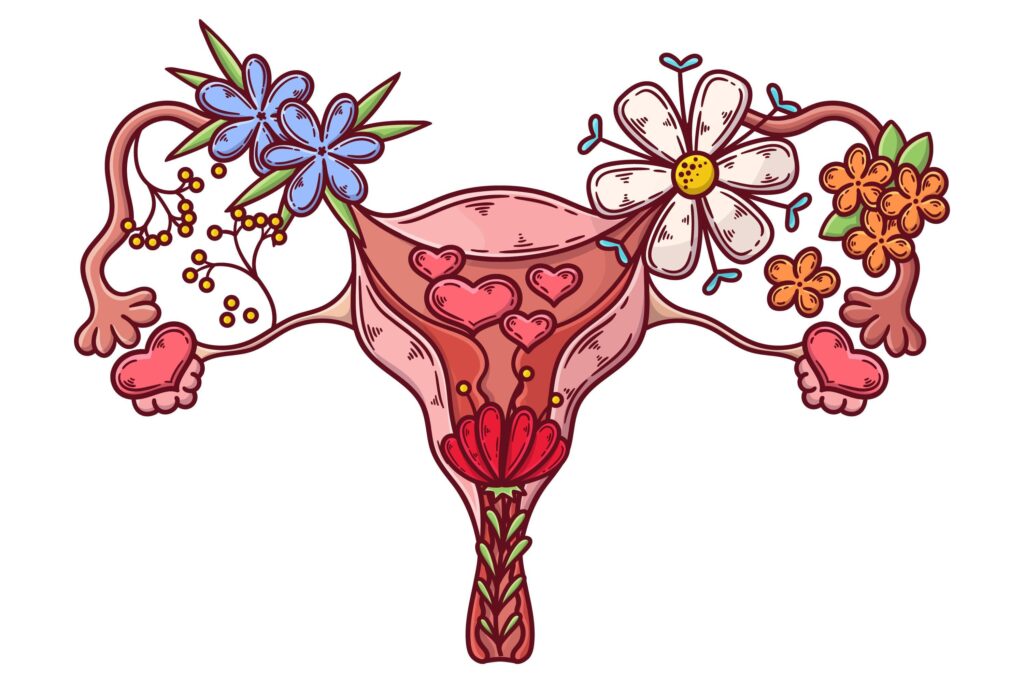
If you have PCOS — or suspect you might — you may have recently come across a new term: PMOS. And you might be wondering what changed, whether your diagnosis still applies, and whether any of this affects your treatment.
The short answer: the condition is the same. The name changed — and for good reason. PCOS Is Now Called PMOS. In May 2026, an international group of experts officially renamed Polycystic Ovary Syndrome (PCOS) to Polyendocrine Metabolic Ovarian Syndrome (PMOS). It’s a mouthful, but the new name finally reflects what clinicians and researchers have known for years: this is a condition that goes far beyond the ovaries.
Here’s what you need to know about the name change, why it happened, and what it means for women navigating this diagnosis.
Why Did PCOS Get a New Name?
Here are Rocky Mountain Natural Medicine, we are celebrating the fact that PCOS Is Now Called PMOS. This is a long overdue name change and we feel the new name is much more validating to patients’ reality with this condition. The name Polycystic Ovary Syndrome has been problematic for decades — and not just because it’s hard to say. There are two specific problems with it:
•Problem 1: Many women with PCOS don’t have cysts
The “polycystic” in PCOS refers to what can appear on an ultrasound: multiple small follicles on the ovaries, often described as a “string of pearls” appearance. But these aren’t actually cysts in the traditional sense — they’re small antral follicles, immature eggs that haven’t ovulated. And a significant number of women who meet all other diagnostic criteria for the condition don’t show this pattern on ultrasound at all.
The name led to both overdiagnosis (women told they have PCOS based on ultrasound alone) and underdiagnosis (women dismissed because their ovaries looked “normal”). It’s been a source of confusion for patients and clinicians alike for years.
•Problem 2: It’s not just an ovarian condition
Perhaps more importantly, the old name implied this was primarily a gynecological problem — something that lived in the ovaries and showed up as irregular periods. In reality, PCOS/PMOS is a complex hormonal and metabolic syndrome that involves multiple endocrine systems simultaneously. Insulin resistance is considered a central driver in the majority of cases. Adrenal function, thyroid health, cortisol levels, and gut microbiome all play roles. The downstream risks — type 2 diabetes, cardiovascular disease, metabolic syndrome — have nothing to do with the ovaries specifically.
The new name, Polyendocrine Metabolic Ovarian Syndrome, captures all of this. “Polyendocrine” signals that multiple hormone systems are involved. “Metabolic” acknowledges the blood sugar and insulin component. “Ovarian” keeps the reproductive connection. It’s a more accurate description of what’s actually happening in the body.
What PMOS Stands For — and What It Means
PMOS stands for Polyendocrine Metabolic Ovarian Syndrome. Breaking it down:
- Polyendocrine: involving multiple endocrine (hormone-producing) glands and systems — not just the ovaries
- Metabolic: affecting how the body regulates blood sugar, uses insulin, and stores energy — insulin resistance is a core feature
- Ovarian: the ovaries remain central to the condition’s reproductive and hormonal effects
The name change was published in JAMA Internal Medicine in May 2026 and reflects a growing scientific consensus that this condition has been too narrowly defined and treated for too long.
What Stays the Same
Importantly, the name change does not affect your diagnosis. If you were diagnosed with PCOS, that diagnosis is still valid. The Rotterdam Criteria — the diagnostic framework that requires two of three findings (irregular ovulation, signs of androgen excess, or polycystic ovarian morphology on ultrasound) — remains the accepted standard.
What the name change does is shift the framework through which the condition is understood and — ideally — treated. It’s an invitation for clinicians to look beyond the reproductive symptoms and take the metabolic and hormonal complexity of this condition more seriously.
The symptoms are the same. The underlying biology is the same. The treatment approaches that work are the same. The name is just finally catching up to the science.
PMOS Symptoms: What to Watch For
Because PMOS affects multiple systems, symptoms can vary widely from woman to woman. Common presentations include:
- Irregular, infrequent, or absent menstrual periods
- Difficulty conceiving or fertility challenges
- Unexplained weight gain, particularly around the midsection
- Insulin resistance and blood sugar irregularities
- Acne, especially along the jawline and chin
- Excess hair growth on the face, chest, or abdomen (hirsutism)
- Hair thinning or loss on the scalp
- Chronic fatigue and low energy
- Mood changes, anxiety, or depression
- Brain fog and difficulty concentrating
One of the most important things to understand about PMOS is that you don’t need to have all of these symptoms — and the severity varies significantly. Many women have been dismissed or delayed in diagnosis precisely because their symptom picture didn’t match a textbook presentation.
PMOS Doesn’t End at Menopause
One of the most significant — and underappreciated — aspects of this condition is that it doesn’t disappear when your periods stop. A 2026 Harvard Health article highlighted that women with PMOS continue to carry elevated metabolic and cardiovascular risks well into their postmenopausal years.
Menopause itself compounds the picture. The natural decline in estrogen during perimenopause and menopause further reduces insulin sensitivity at the cellular level — which means women who already have insulin resistance as part of their PMOS presentation face a double metabolic challenge during this transition.
This is one reason the new PMOS name matters clinically: it signals that this isn’t a reproductive-age condition that resolves itself. It’s a lifelong metabolic consideration that deserves ongoing attention and support.
Why Insulin Resistance Is Central to PMOS
Insulin resistance is considered a primary driver of PMOS in the majority of cases — and understanding this connection changes how the condition should be approached.
When cells become resistant to insulin, the pancreas compensates by producing more of it. Elevated insulin directly stimulates the ovaries to produce more androgens (testosterone and DHEA), which drives many of the most visible PMOS symptoms: irregular cycles, acne, hair changes, and ovulatory dysfunction. It also promotes fat storage around the midsection and makes weight management significantly more difficult.
This means that addressing insulin resistance isn’t a secondary consideration in PMOS treatment — it’s often the most direct path to improving hormonal balance, menstrual regularity, and metabolic health simultaneously. Dietary changes, targeted supplementation, movement, sleep, and stress management all influence insulin sensitivity in meaningful ways.
What a Naturopathic Approach to PMOS Looks Like
The new name reinforces what naturopathic and functional medicine have always understood about this condition: it requires a whole-body, multi-system approach. Suppressing individual symptoms with pharmaceuticals addresses the surface without touching the underlying drivers.
A naturopathic approach to PMOS typically includes:
- Comprehensive hormone and metabolic testing: going beyond standard bloodwork to assess insulin levels, androgen patterns, cortisol, thyroid function, and hormone metabolites — including advanced panels like the DUTCH Complete test
- Targeted nutritional intervention: dietary strategies specifically designed to improve insulin sensitivity and reduce androgen-driven inflammation
- Evidence-based supplementation: including well-researched options like inositol, which has a strong evidence base for improving insulin sensitivity and ovulatory function in PMOS
- Gut health support: gut dysbiosis contributes to systemic inflammation and hormone disruption in PMOS — addressing it is often a meaningful piece of the puzzle
- Adrenal and stress support: elevated cortisol worsens both insulin resistance and androgen production
- Cycle support and fertility optimization: for women pursuing pregnancy naturally, addressing the underlying drivers of anovulation is the most effective path forward
A Note on Searching for Information
Because the name change is recent, most online resources still use PCOS. It will take a while for the medical community to catch up with the fact that PCOS Is Now Called PMOS. If you’re researching symptoms, treatment options, or natural approaches, searching for both PCOS and PMOS will give you the most complete picture. The underlying science and treatment strategies are the same regardless of which term you encounter — the name is new, the condition is not.
You Don’t Have to Navigate This Alone
Whether you have an existing PCOS diagnosis, have recently heard the term PMOS, or are still trying to make sense of symptoms that haven’t been fully explained, naturopathic and functional medicine offer a more complete evaluation and a broader set of tools than conventional care typically provides.
At Rocky Mountain Natural Medicine, we work with women at every stage of their PMOS journey — from initial diagnosis and testing through long-term metabolic support and fertility care. We offer complimentary 15-minute consultations with all of our doctors. No cost, no commitment — just an honest conversation about what’s possible for your health.
Check out this other post we wrote about root-cause treatment for PCOS/PMOS for more information on this topic.
References
1. Teede HJ, et al. Recommended Name Change for Polycystic Ovary Syndrome. JAMA Internal Medicine. May 2026. https://jamanetwork.com/journals/jamainternalmedicine/fullarticle/2848540
2. Salamon M, Lippincott M. How PMOS (once called PCOS) affects women after menopause. Harvard Health Publishing. June 2026. https://www.health.harvard.edu/womens-health/how-pmos-once-called-pcos-affects-women-after-menopause
3. Christ JP, Cedars MI. Current Guidelines for Diagnosing PCOS. Diagnostics (Basel). 2023;13(6):1113. https://pmc.ncbi.nlm.nih.gov/articles/PMC10047373/
4. Fitz V, et al. Inositol for Polycystic Ovary Syndrome: A Systematic Review and Meta-analysis. J Clin Endocrinol Metab. 2024;109(6):1630–1655. https://pmc.ncbi.nlm.nih.gov/articles/PMC11099481/