
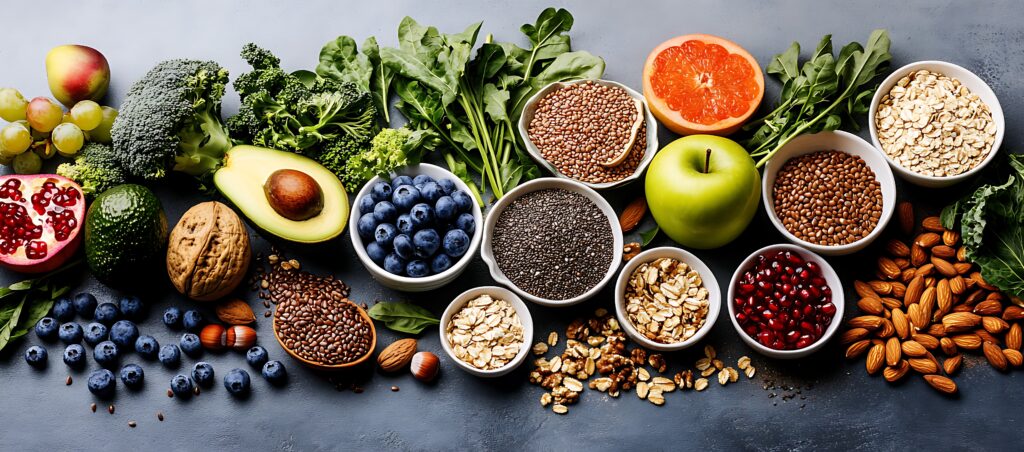
You already know fiber is good for you. The hard part is getting more of it on your plate every day. If you’ve ever wondered how to increase fiber intake without overhauling your whole diet, this post is for you. These are the same simple tips I give patients in my office every week.
Want the “why” behind fiber first? Read our post on dietary fiber health benefits. It covers how fiber helps with cholesterol, blood sugar, hormones, and weight. This post is all about the “how.” For each tip, I’ve listed the nutrition facts so you can see exactly what you’re getting. Numbers come from USDA data and are rounded. Brands vary a little, so check your labels.
How to Increase Fiber Intake Comfortably
Fiber is great for you, but raising your fiber intake too fast can cause gas, bloating, and cramps. Your gut bacteria need time to adjust. Before you try the tips below, keep these simple rules in mind:
- Go slow. Increase your fiber intake by about 5 grams a day. Hold there for a week before you add more.
- Drink more water. Fiber pulls water into your gut. Without enough fluid, more fiber can actually make constipation worse.
- Spread it out. Split your fiber intake across the day, with some fiber at each meal instead of all at once.
- Listen to your body. If you have IBS, SIBO, or another gut condition, some high-fiber foods may cause symptoms. That’s a sign to look deeper, not a reason to give up. Learn more about digestive problems and gut and microbiome health.
- Check on your medications. Fiber can change how some medicines are absorbed. If you take a daily medication, ask your doctor or pharmacist about timing.
9 Easy Ways to Boost Your Fiber Intake
1. Soak a Batch of Chia Seeds at the Start of the Week
Chia seeds are one of the most fiber-dense foods you can buy. Just one ounce has nearly 10 grams of fiber. But dry chia seeds act like tiny sponges. They soak up many times their weight in liquid. Sprinkle them dry onto oatmeal or yogurt, and they pull the moisture right out of your food. You end up with a thick, dry, clumpy bowl.
The fix is simple: soak them first. At the start of the week, pour 2 to 2½ cups of water or unsweetened milk into a glass jar. Stir in about ½ cup of chia seeds. Stir again after 10 minutes so they don’t clump. Keep the jar in the fridge for up to five days.
Now you have a ready-made chia gel. Spoon it into yogurt, oatmeal, smoothies, or overnight oats. It blends right in and gives your fiber intake a boost with zero effort on busy mornings. You also get omega-3 fats and plant protein. For more breakfast ideas, see our high-protein, high-fiber breakfast ideas.
| Serving | Calories | Fiber | Protein | Fat | Carbs |
| Chia seeds, 1 oz dry (about 2 Tbsp) | 138 | 9.8 g | 4.7 g | 8.7 g | 12 g |
2. Keep Canned Beans in Your Pantry
Dried beans are great, but they take planning. Canned beans are ready the moment you open the can. That makes them one of the easiest ways to raise your fiber intake on a busy weeknight.
Stock a few kinds you like, such as black beans, chickpeas, kidney beans, white beans, or lentils. Choose cans labeled BPA-free when you can. BPA is one of the endocrine disruptors we try to help patients avoid. Before you use them, drain and rinse the beans. Rinsing washes away some of the salt. It can cut the sodium by about 40%.
| Serving | Calories | Fiber | Protein | Fat | Carbs |
| Black beans, ½ cup cooked | 114 | 7.5 g | 7.6 g | 0.5 g | 20 g |
3. Toss Beans Onto Your Salads
A green salad is healthy, but it often isn’t very filling. Lettuce is mostly water, so a plain green salad gives you only a little fiber. Adding half a cup of chickpeas or black beans turns a side salad into a real meal. You get more fiber, more protein, and you stay full longer.
Try chickpeas with cucumber, tomato, olives, and feta. Or try black beans with corn, peppers, avocado, and a squeeze of lime. Make a big batch at the start of the week and you have lunch for days. Both fit right into the Mediterranean diet, which we recommend to many patients.
| Serving | Calories | Fiber | Protein | Fat | Carbs |
| Chickpeas, ½ cup cooked | 134 | 6.2 g | 7.3 g | 2.1 g | 22.5 g |
4. Add Beans to Your Sheet Pan Veggies
Sheet pan dinners are one of my favorite shortcuts. Chop your veggies, toss them with olive oil and spices, and roast. To add fiber and protein, add a can of rinsed chickpeas or white beans to the pan. Pat the beans dry first so they get crispy.
Broccoli, cauliflower, Brussels sprouts, carrots, and sweet potatoes all roast well with beans. These vegetables bring their own fiber, too. One cup of broccoli has about 5 grams. Add half a cup of chickpeas and that side dish jumps to over 11 grams. It’s an easy way to raise the fiber intake of a dinner you already make.
| Serving | Calories | Fiber | Protein | Fat | Carbs |
| Broccoli, 1 cup cooked | 55 | 5.1 g | 3.7 g | 0.6 g | 11 g |
5. Use Beans or Lentils as Your Base Instead of Rice
This is one of the biggest swaps I suggest. It works especially well for patients who want more protein and fewer carbs. Most of us build meals on a starchy base, like rice, pasta, or bread. White rice has very little fiber. It also has less protein and fewer minerals than beans.
Try serving your stir-fry, curry, or burrito bowl over lentils or black beans instead. Beans still have carbs, but a big share of those carbs is fiber. Beans also bring far more protein and iron. This swap is a key part of our insulin resistance diet plan, since fiber and protein help keep blood sugar steady.
| 1 cup cooked | Calories | Fiber | Protein | Fat | Total carbs | Net carbs* |
| Lentils | 230 | 15.6 g | 17.9 g | 0.8 g | 40 g | 24 g |
| White rice | 205 | 0.6 g | 4.3 g | 0.4 g | 44.5 g | 44 g |
*Net carbs = total carbs minus fiber.
Not ready to give up rice? Try half and half. Even a 50/50 mix of lentils and rice adds about 7 grams to your fiber intake per cup.
6. Stir Ground Flaxseed Into Foods You Already Eat
Ground flaxseed has a mild, nutty taste. Stir it into oatmeal, yogurt, smoothies, or baked goods. Buy it already ground, or grind whole seeds in a coffee grinder. Whole flaxseeds often pass through your gut without being digested. Store ground flax in the fridge or freezer so the oils stay fresh.
Flax also contains lignans, which may support healthy estrogen balance. You can read more about that in our post on seed cycling for hormone balance. Two tablespoons a day doubles the numbers below. It’s a small but steady way to add to your daily fiber intake.
| Serving | Calories | Fiber | Protein | Fat | Carbs |
| Ground flaxseed, 1 Tbsp | 37 | 1.9 g | 1.3 g | 3.0 g | 2 g |
7. Keep Frozen Raspberries on Hand
Raspberries are one of the highest-fiber fruits you can eat. One cup has about 8 grams. Fresh berries spoil fast, so buy them frozen. Look for bags with no added sugar. Frozen berries make it easy to keep up your fiber intake all year long.
Add them to smoothies, warm them over oatmeal, or stir them into your chia yogurt bowl. Blackberries are a great choice, too. Need smoothie ideas? Try our dairy-free high-protein smoothie recipes.
| Serving | Calories | Fiber | Protein | Fat | Carbs |
| Raspberries, 1 cup | 64 | 8.0 g | 1.5 g | 0.8 g | 14.7 g |
8. Add Half an Avocado
Most people think of avocado as a healthy fat. It’s also a great source of fiber. Half an avocado has almost 7 grams. Add it to eggs, salads, bean bowls, or toast. The fat and fiber work together to keep you full and help keep blood sugar steady. Avocado is a smart way to raise your fiber intake without adding many carbs.
| Serving | Calories | Fiber | Protein | Fat | Carbs |
| Avocado, ½ medium (about 100 g) | 160 | 6.7 g | 2.0 g | 14.7 g | 8.5 g |
9. Snack on Edamame
Edamame are young green soybeans. They make a filling snack with a good mix of fiber and protein. Buy them frozen, either shelled or in the pod. Steam or microwave them, then add a pinch of sea salt. You can also toss shelled edamame into salads and stir-fries. A half cup between meals is a simple way to round out your fiber intake for the day.
| Serving | Calories | Fiber | Protein | Fat | Carbs |
| Edamame, ½ cup shelled, cooked | 94 | 4.0 g | 9.2 g | 4.0 g | 6.9 g |
How Much Fiber Do You Need Each Day?
Your daily fiber intake goal depends on your age, sex, and how much you eat. Here are the standard recommendations for adults:
| Age 50 and under | Over age 50 | |
| Women | 25 grams per day | 21 grams per day |
| Men | 38 grams per day | 30 grams per day |
Another easy rule is to aim for about 14 grams of fiber for every 1,000 calories you eat. Most Americans get only about 15 grams a day. That means many people need to nearly double what they eat now. In my practice, many patients feel their best at the higher end of these ranges.
What 29 Grams Looks Like in a Real Day
Here’s how a few of the tips above add up:
- Breakfast: Yogurt with 1 oz of soaked chia seeds and ½ cup of raspberries = 13.8 g
- Lunch: Green salad topped with ½ cup of chickpeas = 6.2 g
- Snack: ½ cup of edamame = 4.0 g
- Dinner: Salmon with 1 cup of roasted broccoli = 5.1 g
That’s about 29 grams. And it doesn’t count the lettuce, the extra veggies, or any whole grains you eat. Spreading your fiber intake across the day like this is also easier on your gut.
Quick-Reference Fiber Chart
Use this chart to check your fiber intake at a glance:
| Food | Serving | Fiber | Protein | Calories |
| Lentils | 1 cup cooked | 15.6 g | 17.9 g | 230 |
| Chia seeds | 1 oz (about 2 Tbsp) | 9.8 g | 4.7 g | 138 |
| Raspberries | 1 cup | 8.0 g | 1.5 g | 64 |
| Black beans | ½ cup cooked | 7.5 g | 7.6 g | 114 |
| Avocado | ½ medium | 6.7 g | 2.0 g | 160 |
| Chickpeas | ½ cup cooked | 6.2 g | 7.3 g | 134 |
| Broccoli | 1 cup cooked | 5.1 g | 3.7 g | 55 |
| Edamame | ½ cup shelled | 4.0 g | 9.2 g | 94 |
| Ground flaxseed | 1 Tbsp | 1.9 g | 1.3 g | 37 |
| White rice (for comparison) | 1 cup cooked | 0.6 g | 4.3 g | 205 |
Need Help Building a Plan That Works for Your Gut?
Start with one or two tips this week, go slow, and build from there. Do high-fiber foods leave you bloated or uncomfortable? That may point to a gut issue worth a closer look, such as food sensitivities or leaky gut. At Rocky Mountain Natural Medicine, we work alongside your primary care provider. Together, we find the root cause and build a nutrition plan that fits your life. Learning how to increase fiber intake is one of the simplest changes you can make for your long-term health. We’d love to help. Schedule a complimentary 15-minute consultation with any of our naturopathic doctors.